How to write yoga cues students actually follow
Students follow the first thing they hear and the last thing they remember. Good cues are short, physical and in the right order. Here's a structure that works, with examples you can borrow.
Cue in the order the body builds
Teach a pose the way it is built: from the ground up. A reliable order is:
- Foundation: where the feet, hands or seat go. “Step your left foot back, heel down.”
- Action: the one thing to do once there. “Press the outer edge of the back foot into the mat.”
- Breath: when to move and how long to stay. “Inhale, reach the arms up. Stay for five breaths.”
Refinements (“soften the jaw”, “broaden the collarbones”) come only once everyone has arrived. Before that, they get lost.
Use actions, not anatomy lectures
“Engage your transverse abdominis” asks students to translate. “Draw your navel gently toward your spine” tells them what to do. Name something they can feel or see: a body part, a direction, a point in the room.
| Instead of | Try |
|---|---|
| “Externally rotate the femur.” | “Turn your front knee toward your little toe.” |
| “Lengthen the spine.” | “Reach the crown of your head forward, tail back.” |
| “Relax your shoulders.” | “Let your shoulders slide away from your ears.” |
| “Engage your quads.” | “Lift your kneecaps.” |
One cue per breath
Students can take in about one instruction per breath. If you give four in a row, they'll do the first and the last. Pace your words to the breath, and leave some breaths without words at all. Silence is a cue too: it tells students to stay.
Examples for common poses
Downward-facing dog (Adho Mukha Svanasana)
“Hands shoulder-width, fingers wide. Press the floor away and lift your hips up and back. Knees can stay bent. Five breaths here.”
Warrior II (Virabhadrasana II)
“Front heel lines up with the back arch. Bend the front knee over the ankle. Reach long through both arms and look past your front fingers.”
Tree pose (Vrksasana)
“Weight into the left foot. Place the right foot on the ankle, calf or inner thigh, anywhere but the knee. Press foot and leg into each other. Find one still point to look at.”
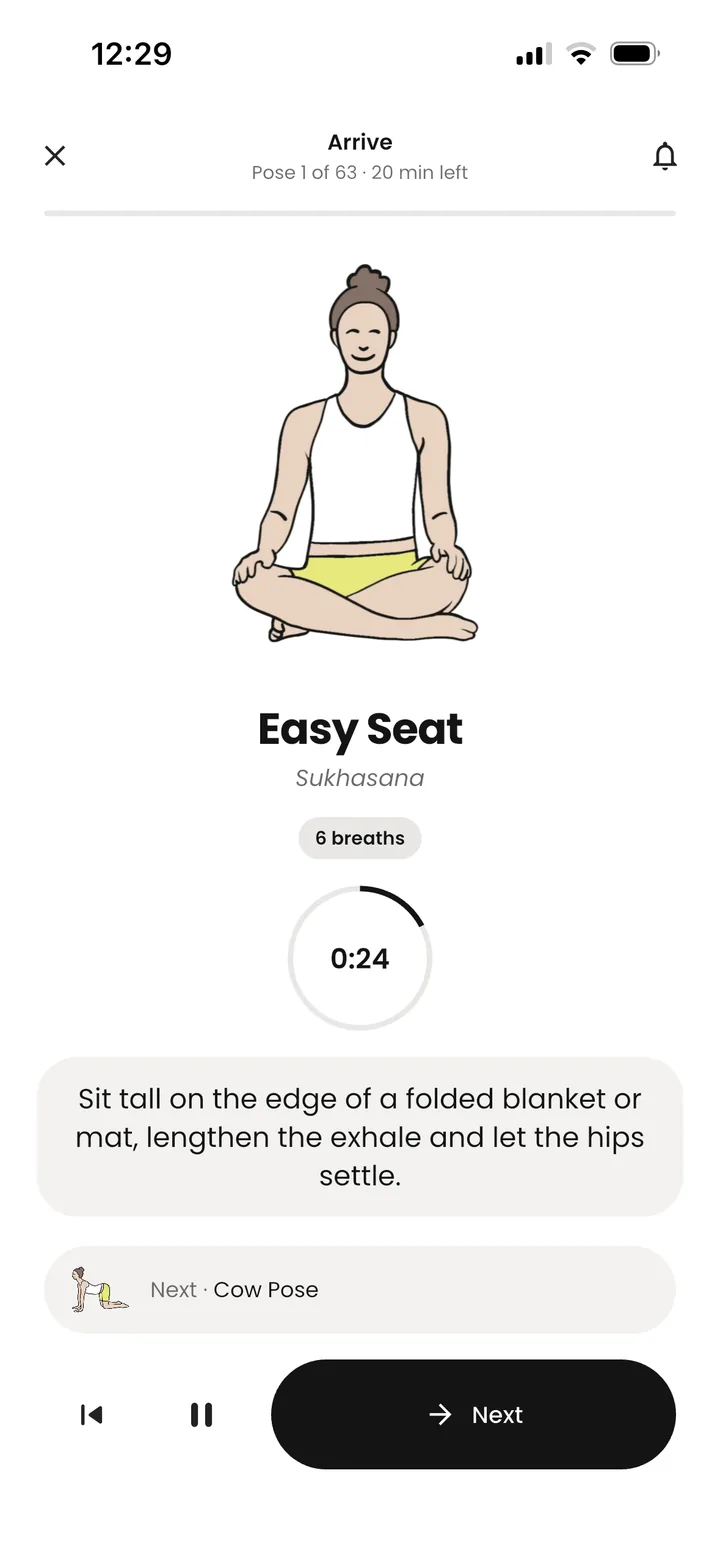
Easy seat (Sukhasana)
“Sit tall on the edge of a folded blanket. Let your hands rest on your thighs. Lengthen the exhale and let the hips settle.”
Cueing a mixed-level room
- Teach the accessible version first, then add the option. “Knees down here. If you want more, lift the knees.”
- Make options equal. “Either version is great” beats “if you can't do it…”.
- Use props as defaults, not as rescues. “Take a block under your hand” lands better than “use a block if you're not flexible”.
Write your cues before class
The cue you plan is better than the cue you improvise. Write the one most important cue for each pose in your plan, and keep a private note for anything that's just for you: a student's injury, a story for the intention, a reminder to slow down.